
Conversion RateOptimization for HVAC Companies
The traffic is already paid for.
What costs you is the gap between a homeowner landing on the page and a job in the calendar: the page that buries the phone number, the call that rings out at half past five in July, and the closed job whose value never goes back to the ad platform. Each leak has its own fix, sold on its own, and every one of them is cheaper than buying the same traffic a second time. Nothing here needs a rebuild of the site you already have.
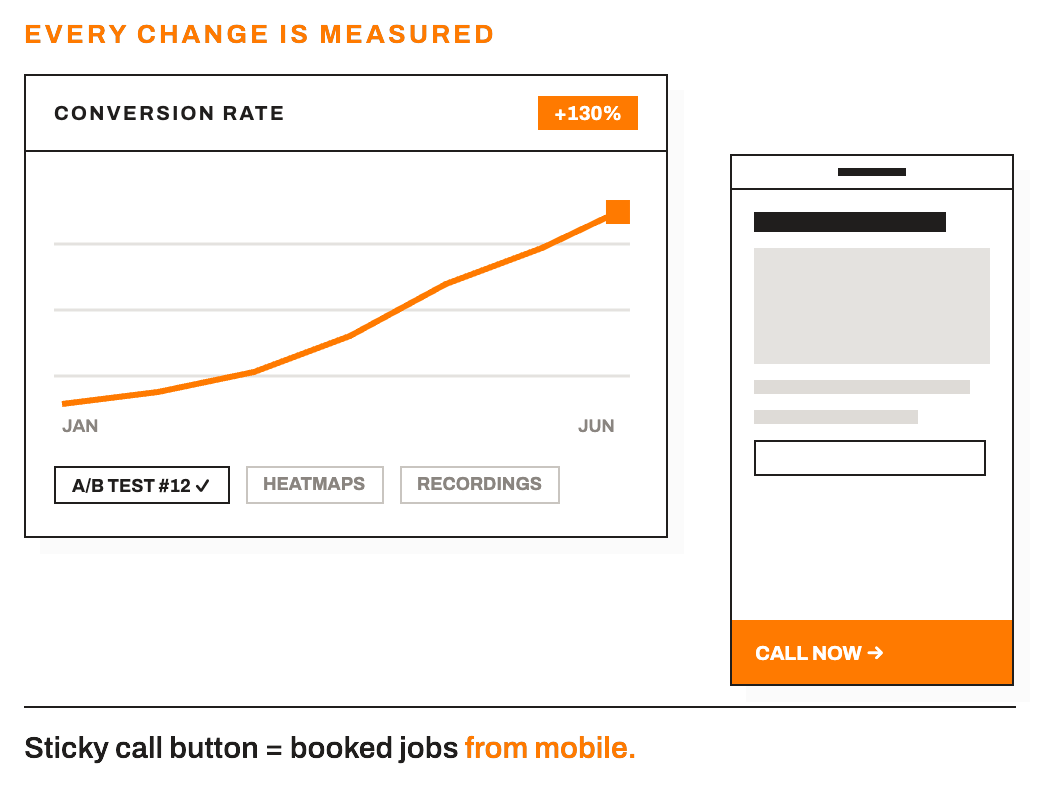
What conversion rate optimization for HVAC covers
The scope of the group, so you can tell which leak is yours before you spend anything on the other five.
Conversion rate optimization for HVAC companies is everything that happens between a homeowner landing on the site and a job appearing in the calendar. The traffic is already paid for, by an ad budget or by months of SEO, so every point of conversion is bought at a fraction of what buying the same number of extra visitors would cost.
In this trade the leaks are specific and they are not all on the website. The page that buries the phone number leaks one way, the call that rings out at half past five in July leaks another, the homeowner who wanted to book at eleven at night leaks a third, and the closed job that never gets sent back to the ad platform leaks the fourth, quietly, by teaching the algorithm to optimise for form fills instead of revenue.
Not sure which leak is costing you most?
Fifteen minutes with your analytics and your call log. We will tell you which one moves your booked jobs first.
The four places an HVAC job leaks out
The page that does not ask for the call, the call that rings out at half past five in July, the homeowner who wanted to book at eleven at night, and the closed job that never makes it back into the ad platform. Each leak has its own service here, and each one is cheaper to fix than buying the traffic again.
See the services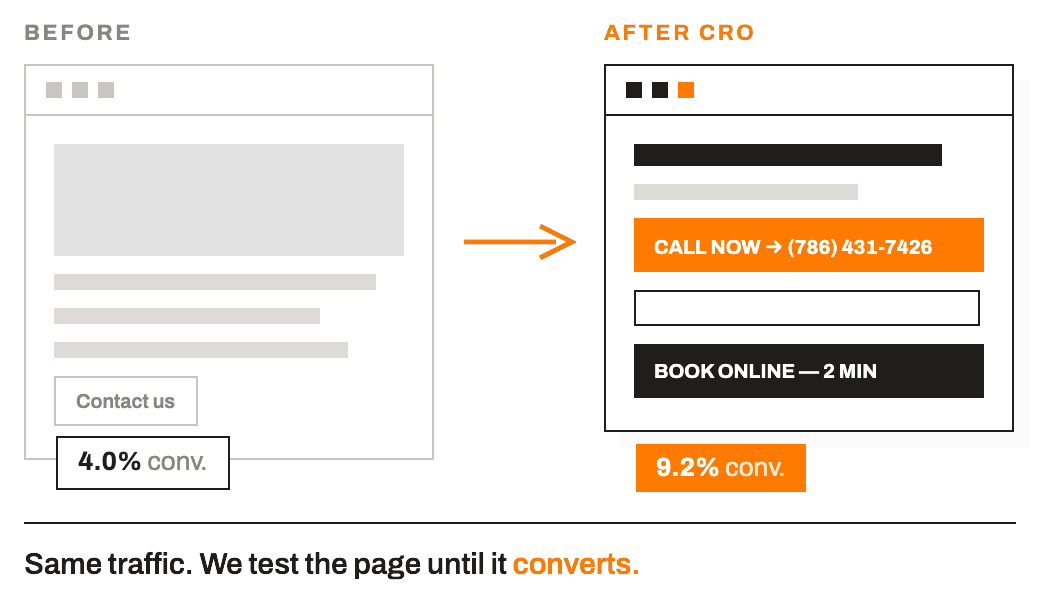
Three conversion services, each with a price
Each one is bought on its own, at the price on the card. Nothing here is gated behind a call and nothing here needs a retainer.
Which conversion service to buy first
The order matters more than the total spend. Bought in the wrong order, two of these pay for work the third has to redo.
01
Find out where it leaks
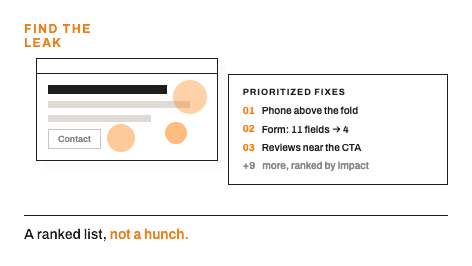
Session recordings, form analytics and the actual call log on the top five pages. The audit is the only thing here that produces a list rather than a change, and it is what keeps the rest from being guesswork.
02
Fix the page, then the phone
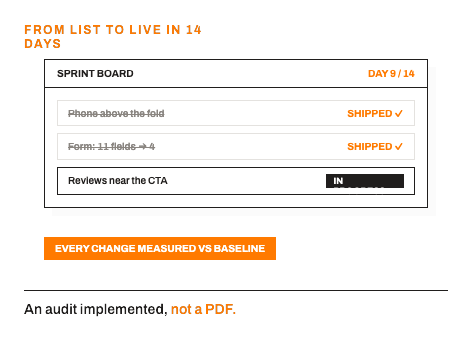
The sprint implements the list. Missed-call text-back catches the twenty five to forty percent of calls that never get answered, and it usually pays for itself before any ranking moves.
03
Let them book without talking to anybody
Native booking keeps the homeowner on your domain instead of throwing them into a third-party widget, and it captures the after-hours bookings that the phone never sees.
04
Send the money back to the platform
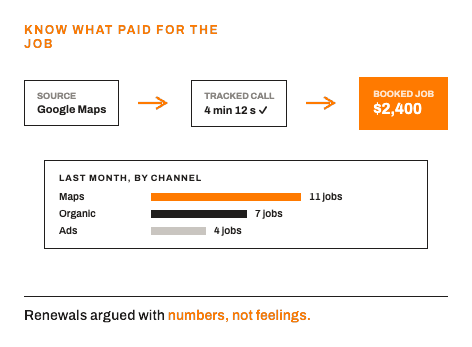
Offline conversion import pushes closed job value back into Google, so the algorithm optimises for revenue instead of for form fills. Without tracking in place first, none of the other five can be proven.
What conversion rate optimization for HVAC costs
Entry prices in this family run from $649 to $1,495, one-time, with the exact number on every card above and in the service agreement before anything starts.
Two of the six carry a monthly, because they run software that keeps working after delivery. The other four are one-time. None of them requires a website rebuild, and if the site itself is the bottleneck the audit says so before you spend on the rest.
The words this page uses
Speed to lead
The time between an enquiry arriving and a human or system responding. In home services it predicts close rate more reliably than almost anything else.
Dynamic number insertion
Swapping the phone number shown to a website visitor by traffic source, so a call can be attributed without changing the number on the Google Business Profile.
Offline conversion
A booked job and its revenue pushed back into the ad and analytics platforms, so spend is judged on jobs won rather than on forms submitted.
The questions contractors actually ask
Answered straight, including the ones where the answer is no.
What should I buy first?
Tracking, if you cannot currently say which channel produced last month's jobs. Missed-call text-back, if the phone is already ringing and going unanswered. The audit, if the traffic is there and you do not know why it does not convert.
Do I need a new website for this?
No. Everything in this family works on the site you already have. If the site itself is the bottleneck the audit will say so, and a rebuild is a different service with a different price.
How is the audit different from the sprint?
The audit is the diagnosis and ends in a prioritised list. The sprint is the implementation of that list. An audit nobody implements is a PDF, which is why most contractors buy them together.
Can you prove any of this worked?
That is what tracking and offline conversion import are for. Thirty days after delivery we send the numbers whether they moved or not, measured against the baseline taken before we started.